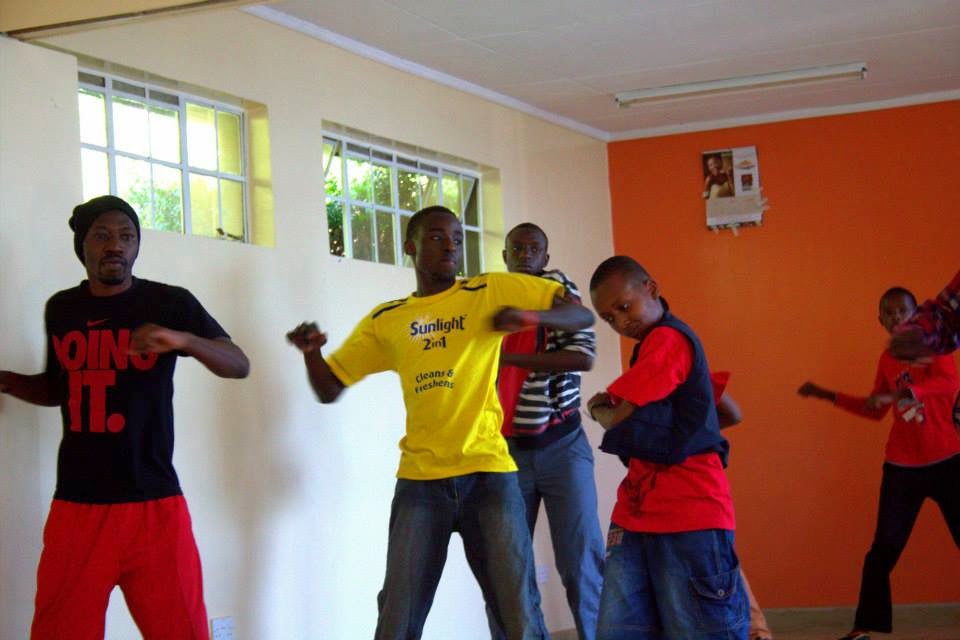
Saturday, 20 September 2014

10 Dance Career Tips From Professional Dancers.

Dance careers especially in my Country can be difficult to jump-start, so i tried to list down some advice from professional dancers in and around the globe? 

 This weekend, I had some additions to our usual group of friends, professional dancers. After I got over my initial sense of awe, we began to talk about their dance careers. I've always been fascinated with how people rise to the top of their profession. Professional athletes, movie stars and bands, they all have a unique story but there are usually some core similarities. This article outlines the basic things you should do to start your career in dance to become a professional dancer. Now, you'll need a little bit of luck, good timing and connections as well, but you could get all of that while getting a Big Mac at your local McDonalds. Natural talent is a good base, but it won't take you to the top. You need to nurture that talent, develop it and present it to the right people. This article shows you the basics. Some are more obvious than others. Most of you just need some reassurance that you're taking the right steps to reach your goal, while others have no idea where to start. I believe that not all people in the know have the level of talent they need, and not all people with talent are in the know. I want to change that, so let's start! 


 1. People do not become professionals in anything by reading a few articles or practicing a few hours a week. They become students of their profession. Students go to school. This goes for professional dancers as well. Now, there are a select few that push themselves on their own and have developed a wonderful ability, but that is still not enough. Their talent is rough and unrefined. Regardless of how many years you've practised in your basement, everyone needs some formal training. Nothing can replace a veteran dancer showing you right from wrong, critiquing you and encouraging you. Start by going to a dance studio. Obviously, the sooner you do this the better. You,ll rack up experience and the younger you are the more receptive you are to learning. A good rule of thumb is the bigger the dance studio the better the dance professionals. However, a good teacher has experience, but also a connection with their pupil. This relationship can be forged at smaller, local dance studios as well. Remember, this is just the beginning. There are many professionals that reminisce about a grade school teacher that influenced them the most. Of course, it was probably some Julliard professor that trained them the most, but the person who taught them passion and desire is usually someone they met earlier in their dance career.


2. Dance camps and other supplemental dance institutions are a great way to increase your exposure to various aspects of the dance industry. You will network, learn techniques and be exposed to different teachers and performances. Going outside your comfort zone is a great way to build independence, character and a sense of responsibility as a dancer. 

3. When you graduate high school, you'll be looking to go on to college. This decision should be well thought out. You're going to trust them with your education that will play a significant role in life after college. As an aspiring, professional dancer, you will want to attend the most prestigious dance school you can find. Try to find an accredited dance school, but at the very least any dance school is better than none. Make sure you start planning before it's time to apply, like well before. You should begin your research about dance schools while you're still in high school. Find out what requirements they are looking for in a dancer. Do whatever you can to better your chances at being accepted. By the end of your formal training, you should, if you haven't already, be narrowing down your dance techniques to a few select, specialized styles. You need to seek out the best dance teacher(s) you can find in those styles and train! train! train. Like any profession, it's all about education, and for a professional dancer, you never stop learning and practising. Once again, if you are serious and want to advance in your dance career, at this point you need an expert, a real professional dance teacher. 


 4. The next tip is something that I've written about before as my facebook post. You need good head and body shots, and for that you need a good photographer. I’ll Refer to my next article, 4 Tips for Great Actor Head-shots, on Talent Trove for more information about what you need for a good portfolio. Yes, it's about actor heads-shots, but there are some valid and transferable tips for dancers as well. The important thing to remember for your body shots as a dancer is that you should take pictures of yourself in various dance-wears. Don't wear flashy jewelry, use lighting or shadows to create illusions, or distract the observer with a complex or interesting background. You should be the focus and the subject of interest, nothing else. Good photographs can really help you further you dance career by grabbing the attention of those who should be watching you.


5. At this point, you should already have been to minor dance auditions and castings, just to get your feet wet and some sort of experience, however, now you are ready for some serious work and it is work. Don't ever forget that this is your job, your profession. This new level of dance might come as a shock or seem like foreign territory, but you must believe that you are good enough to be here. You are good enough to be here. This is a higher standard. It will be different. It will be difficult, but that is what makes it so much greater when you succeed. You've come this far. This is what you've been training for, and others have found potential in you, enough to accept and train you. You belong here. The more of these auditions and casting calls you attend, the more comfortable you will become. 


 6. Those networking and people skills you picked up during your days at dance camp and college will now come into play. You're in the deep end of the pool now, playing with the big kids. Time to mingle and make new friends. You have to start talking to those professional dancers you see walking the studio halls during your dance auditions. Talk to other dancers who are auditioning. Talk to the judges, casting directors, agents, anyone that will talk to you. Ask them questions, pick their brain, and learn from their stories. Even if they don't answer your questions, their behaviour, demeanour, and way of conversing with you will teach you something. The best thing you can do is become friends with someone successful.

7. You should be fairly comfortable with auditioning by now, and ready to start searching for a dance agent or a dance agency. You will most likely have to perform a dance routine for them in order to be accepted, however, once you're in you will be given opportunities that you otherwise wouldn't know existed. These dance agents and dance agencies get the scoop on dance auditions and casting calls so try your best to get represented by one. Once you are in, your dance career will be given wings. However, this is no time to take it easy and coast on through. Now is the time to step it up.


8. Back to what I mentioned before, you never stop learning and practising.Well, it's time to train! train! train. Practice makes perfect, I know you've heard that before. This intense training period isn't about learning new styles as it might have been about before. This dance training will focus on honing your existing skills and techniques down to a sharp, crisp point. You need to be awesome in what you do, not mediocre in a broad range of areas. A professional dancer needs to be at the top of their specific field, not hovering in the middle across the board. You'll have plenty of time later to expand your horizons, but for now you need a job so you can gain valuable experience and money. Also, stop and take a breath. Look around, you're becoming a dancer, and your dance career is beginning to take shape. Enjoy it!


9. When you think you're ready, and don't wait to long at this point, start researching some choreographers you would like to work with or train with as a pupil. Most dance choreographers will offer dance classes at their own dance studios. You have to wait this long before you attempt to train with a professional dance choreographer, because they are just that, professionals. Dance choreographers will only work with the best dancers so you have to be at a certain point of your dance career for them to take interest in you. There are many benefits to working with a dance choreographer. You become familiar with the way this aspect of the dance industry works. They will begin to recognize you and perhaps throw some work your way. You will also be updated and trained in the most current dance techniques and trends. The fewer things that surprise you during a dance audition the better.


10. At the end of all this there is one important thing to remember, that usually separates those that make it and those that do not. If this is truly what you want, and you've dreamt about it all your life, never give up trying. Every successful person in the world has one thing in common. They were relentless in their pursuit of happiness. If you want to make the most out of your dance career, it will take a lot of hard work so don't get discouraged. You'll get rejected. Everyone does. Being a dancer is not easy for anyone, but people do it. Why not you?


These tips are not set in stone or by any means in exact order. Everyone is different and some people might jump ahead or start one step later in their career. The important thing is that you have a clear plan with goals, and you work hard to achieve them. 

Never loose hope :-)


B-boy Harry Foundation, Compass Nella Fitness Centre, Ongata Rongai.

Email: bboyharry@live.com - Phone: +254 700 472 451.


Friday, 19 September 2014

Hip Hop Dance Expo Part 1.

Hip Hop Dance is great fun but very hard work if you want to dance well. So here is a flavour of what it's like to learn and lots of insider tips. And, most importantly, here is your chance to try out a full length dance class right now, in your own home, absolutely FREE!
Our very own instructional Hip Hop dance class is available for you to dance along with at home.
Just read through these pages, follow the information.....
They build to a full dance routine for beginners that features one of the most popular Street dance teachers ever.

So right here is everything you need to know to get dancing Hip Hop online.

Hip Hop Dance History

Hip Hop dance classes come under a variety of names. As Hip Hop is a cover-all term for modern Street dance, a lesson can draw its inspiration from many Street dancing styles, old and new. 
Look out for these classes...


  • Funk
  • Street Style
  • Street Dance
  • Zoo
  • Hip Pop
  • Fusion
  • R n B Moves
  • Locking and Popping
  • Street Locking
  • Old School AKA Old Skool
  • New Wave
  • Free Style
  • Urban Groove
  • Urban Dance
  • Electric Boogaloo
And that's just a few!
The style of movement started back in the 1970's when disco and funk dancing became popular. So the roots of the dance you will do in a Hip Hop dance class can be directly traced back over 40 years.
In that time, many different types of moves and steps have been created. So you'll find there are very few set boundaries where one dance ends and another begins. You will dance a blend of styles in your Street dance class.

Therefore, you could find that after just a few lessons, you've experienced many of the classic Hip Hop dance techniques.
That way, perhaps you will feel a preference for one over the other, and as your dancing progresses you can go to a more specialist class.

So beginners classes are a fantastic way to learn a lot about most types of Street dancing in a fairly short time.

Ready to get dancing? 
Clear a bit of space.  And make sure you're wearing something comfortable - you're going to be warming up and cooling down like a pro dancer, so workout wear is best for this.
"I learnt your Hip Hop routine,
did it at my school talent show, and WON!"

Comment from one of my Students. :-) 


What to Wear to Hip Hop Class


Hip Hop clothes can be more or less anything, but we've still got a few valuable tips for you.

While baggy street clothes are obviously popular, bear in mind that Hip Hop is incredibly hard work and it is sensible to wear something that is going to keep you as cool as possible.

 
Then you can put some street clothes on top for when you leave the lesson, and you won't cramp up as much.
This is particularly important if the class doesn't have a cool down period - but we've taken care of that and you can learn ours. Just follow the online class all the way through!

It is a good idea for beginners to tie their hair back for these classes. You do so much head, neck and shoulder movement that it'll just get in your way and you'll end up having to fish it out of your eyes, nose, mouth and your fellow pupil's face too, when actually you need to be concentrating on what the teacher is doing.
Save tossing your mane about for when you're a little more confident of your moves, OK?


 Hip Hop Shoes


Hip Hop Sneakers
When you go to a Hip Hop class you must wear footwear the gives you really good arch and ankle support.
You are going to be doing a lot of hopping, stomping and stamps in a Hip Hop lesson.  So to prevent injury, you must have a good pair of dance sneakers on.

You absolutely should not try a Hip Hop lesson in ballet shoes, socks or bare feet – you must have support.
(However, as Lil' J once said, if you are dancing on nice thick carpet at home, arch support isn't so important - but it really is if you are dancing on a hard floor.)
If you dance Hip Hop on a hard floor without arch and ankle support you'll jar your ligaments and lower back, and put enormous strain on your joints, which as every dancer knows, is something to be avoided at all costs.

So if you are going to take your dancing seriously, get yourself a seriously good pair of sneakers.


OK, that's the end of Part 1. We're just getting started!

B-boy Harry Foundation, Compass Nella Fitness Centre, Ongata Rongai.

Email: bboyharry@live.com - Phone: +254 700 472 451.

Wednesday, 17 September 2014

22 Things Good Dancers Do Differently!

We all like to look up to the good dancers. I support this; it’s great to have role models.
But how did they get so good? Stop spending such a massive quantity of your time wondering! It makes B-boy Harry sad.
As I’ve mentioned many times in My Workshops, it’s not magic. It’s also not “natural talent.”
Dancers get good by doing lots of things differently. Read on to find out 22 uncommon actions they take and why you should too.


NOTE: Most lindy hoppers I’ve asked aren’t 100% satisfied with their dancing. If you’re in that camp, follow the directions at the end to get the most out of this post.

Good dancers…

1. Overcome excuses about why they can’t practice. Ain’t no way you’re moving up if you can’t gain some momentum in your dance practice.
2. Take music seriously. If you need convincing, you’re not ready to advance.
3. Use both a mirror and video regularly in practice. Oh, I know there’s resistance to this. I dare you to try this every week for a month, then come tell me you failed. You won’t do it. Fail, I mean. It will be a raging success, and you’ll wish you’d gotten over yourself earlier.
4. Analyse themselves on video. It may pain you at first, but the cringing doesn’t last for long.
5. Ignore the haters. If everyone likes you, you’re probably boring.
6. Learn to dance without a partner. Relying on your partner is a crutch. If you can hold your own on the dance floor, nothing can stop you. Plus practising alone is surprisingly good for you.
7. Strive to constantly make new discoveries about dancing (rather than waiting to be spoon fed the answers). This is a crucial part of developing your unique perspective and voice. Don’t be a dance robot.
8. Seek out instructors/mentors they mesh with and who push them.
9. Practice the shit out of everything. Does this one need explaining? Of course you’ll need to do high-quality practice, not mindless practice.
10. Disregard their inner critics’ harsh thoughts. Your inner critic is just a little child trying to distract you from doing worthwhile things. Hit the ignore button.
11. Take aches and pains seriously. Our world is full of promising dancers who ignored their injuries and failed to excel. It’s never too late to start treating your body right.
12. Develop a unique voice and perspective on dance. You’ll need to figure out what this means to you. I can only promise that this is usually a difficult process. But hey, you’re looking for hard things to work on and making your own discoveries now, right?
13. Work on hard things. Most dancers focus on what comes easy. This is good for your ego in the short term, but so-so for your dancing. Look for and practice moves and concepts that challenge you. It gives you the most bang for you buck.
14. Listen to jazz [or insert your genre here] just for fun. Just because there’s a picture of a rubber ducky wearing a storm trooper helmet above doesn’t mean you can skip this.
15. Test themselves regularly. Practice is not “the thing.” Do The Thing you actually want to do! Perform, enter comps, choreograph, teach, film dance videos—whatever calls to you. Go do lots of that, then do lots more.
16. Always work on improving fitness. Good muscular balance and aerobic conditioning augment your dance ability. If you’re looking for a place to start, try glute exercises.
17. Avoid shit talking, complaining, and making excuses. This type of negativity just holds you back. Jealousy and self-sabotage anyone?
18. Ignore their judgemental thoughts. We all have ‘em, and they are terribly distracting. Go get to work!
19. Truly believe they can do it. It’s the difference between a fixed mindset and a growth mindset. You always have the ability to improve. Ponder that, take it to heart; it IS the truth.
20. Find friends who support them. Possibly the most confounding item on this list. Adults these days have a hard time finding good friends, don’t we? And then there’s the expectation that we should be able to do it all alone. Bullshit. Every successful person has a ton of support from their friends. This applies to dancers too.
21. Get consistent, accurate feedback during practice. Your partner, instructor, mirror, and video can all help.
22. Commit. You’re going to be doing this a long time. Keep going, even when it gets really tough. And it WILL get tough.

Do This Now!

Grab a notebook and ask yourself, “Which have I done well at? Which are falling through the cracks?” Evaluate yourself honestly; no one’s watching.                       For each action above you can improve on, jot down a few notes about how you can improve. For example, I want to analyse myself on video more often. My notes might say, “Take a 60 second video halfway through practice. Watch it 3 times, pick 2 things to work on, then work on them for the rest of practice.”
 
Then go try some of those plans.
Remember: It’s not magic. As soon as you start taking these actions to improve your dancing, you’ll see results. Go on, I dare you to try! For more help getting your practice groove on call me +254 700 472 451. Thus check out: https://www.facebook.com/pages/B-boy-Harry/285561131477940


B-boy Harry Foundation, Compass Nella Fitness Centre, Ongata Rongai.
Email: bboyharry@live.com - Phone: +254 700 472 451.

Monday, 8 September 2014

CAMP TALANTA WORKSHOP Through Pictures as it happened from August 26th to 30th 2014.


Worksop Courtesy of Nairobi Chapel Rongai (NCOR), B-boy harry Foundation, Pro - Seed, Deejay Joelz Academy.
 
B-boy Harry Foundation, Compass Nella Fitness Centre, Ongata Rongai.
Email: bboyharry@live.com - Phone: +254 700 472 451.

Thursday, 14 August 2014

SAKATA MASHARIKI JUDGE JO1 GOOD LOVE VIDEO SHOOT (Behind The Scenes)


Photography by: Oska Matasi.
WATCH #GoodLove Video here: http://youtu.be/bI7JqHGx0bE

B-boy Harry Foundation, Compass Nella Fitness Centre, Ongata Rongai.
Email: bboyharry@live.com - Phone: +254 700 472 451.